
Missing a tooth affects more than just the way your smile looks. It changes how you eat, how you speak, and, over time, how your other teeth sit in your mouth. Dental bridges are one of the most trusted and widely used solutions for replacing missing teeth—and for good reason.
If you are exploring dental bridges near you, understanding the full range of benefits helps you see why so many patients choose this treatment to restore their smile and their confidence.
What Is a Dental Bridge?
Before exploring the benefits, it helps to understand what a dental bridge actually is.
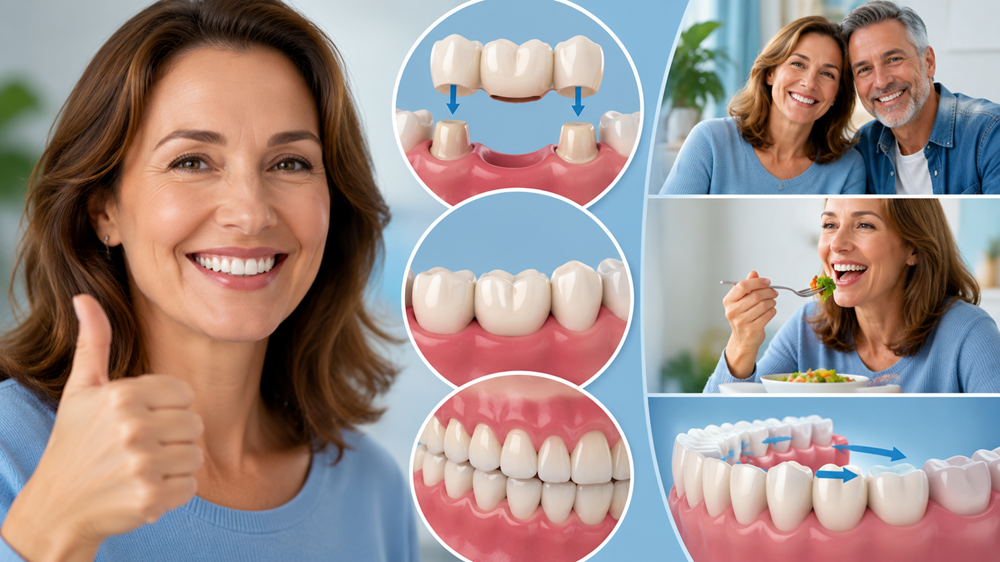
A dental bridge is a fixed dental restoration that replaces one or more missing teeth. It consists of:
- Anchor crowns—placed over the healthy teeth on either side of the gap
- Pontic—The artificial tooth or teeth that sit in the middle and fill the empty space
The bridge is cemented permanently into place. It does not come in and out like a denture. Once it is fitted, it stays securely in your mouth and functions like your natural teeth.
Most bridges are made from porcelain, zirconia, or a combination of porcelain and metal—all designed to look natural and blend seamlessly with your surrounding teeth.
The Key Benefits of Dental Bridges
They Restore Your Ability to Chew Comfortably
One of the first things people notice after losing a tooth is how much harder chewing becomes. You naturally start favouring the other side of your mouth—which puts extra pressure on those teeth and can cause them to wear down faster.
A dental bridge fills the gap and restores your bite. You can chew on both sides of your mouth evenly again, which takes the unnecessary strain off your remaining teeth.
They Improve the Way You Speak
Teeth play a bigger role in speech than most people realize. Missing front teeth in particular can change how certain sounds are made—making words come out differently or causing a slight lisp.
A bridge restores the full structure of your mouth, helping you speak clearly and naturally again.
They Prevent Neighbouring Teeth From Shifting
This is one of the most important benefits that many people overlook.
When a tooth is missing, the teeth on either side of the gap gradually drift toward the empty space. The tooth above or below the gap also begins to shift—moving out of its normal position.
Over time, this shifting causes:
- Bite problems and jaw discomfort
- Crooked or overlapping teeth
- Increased difficulty cleaning between teeth
- A higher risk of decay and gum disease
A bridge holds the surrounding teeth in place by filling the gap before this shifting can occur.
They Help Preserve Facial Structure
Your teeth support the shape of your face. When a tooth—especially a back tooth—is missing for a long time, the jawbone in that area can begin to lose density. This can eventually cause the face to look slightly sunken or aged in that region.
A bridge maintains the natural contours of your face by filling the space and keeping the surrounding structure supported.
They Look Completely Natural
Modern dental bridges are crafted to match the colour, size, and shape of your natural teeth. A well-made porcelain or zirconia bridge is virtually indistinguishable from the real thing.
Patients who choose a dental clinic near you with experienced dental professionals consistently find that their bridge blends in so naturally that most people have no idea it is there.
They Are a Long-Lasting Solution
With the right care, a dental bridge can last between 10 and 15 years—sometimes significantly longer.
Here is what affects the lifespan of a bridge:
|
Factor |
How It Impacts Longevity |
|
Oral hygiene habits |
Good cleaning extends lifespan significantly |
|
Diet and food choices |
Avoiding hard and sticky foods protects the bridge |
|
Teeth grinding |
A night guard prevents excessive wear |
|
Regular dental checkups |
Allows early detection of any issues |
| Health of anchor teeth |
Strong, healthy anchor teeth support the bridge better |
They Are More Affordable Than Implants
Dental implants are an excellent tooth replacement option—but they involve surgery, a longer treatment timeline, and a higher cost. For patients who want a reliable, natural-looking solution at a more accessible price point, bridges offer outstanding value.
Bridges also do not require surgery, which makes them suitable for patients who may not be candidates for implants due to health reasons or insufficient bone density.
They Restore Confidence
Perhaps the most meaningful benefit is the one that is hardest to measure—the return of genuine confidence.
Many patients who live with a missing tooth begin to smile less openly, cover their mouth in photos, or feel self-conscious in social and professional settings. Restoring a complete smile has a real and positive impact on how people feel about themselves day to day.
Are Dental Bridges Right for Everyone?
Bridges work beautifully for most patients—but the right fit depends on your specific situation.
A bridge may be a great option if you:
- Have one or more missing teeth with healthy teeth on either side
- Have healthy gums and good overall oral health
- Want a fixed, non-removable solution
- Are you looking for a faster and more affordable alternative to implants
Your dentist will assess your teeth, gums, and bite thoroughly before recommending a bridge—and will always be honest if a different treatment would serve you better.
How to Care for Your Dental Bridge
How to care for a bridge is simple. Just a few regular daily habits will ensure it remains in excellent condition for years:
- Brush twice daily with a soft toothbrush
- Use a floss threader or water flosser to clean underneath the bridge
- Avoid biting directly into very hard or sticky foods
- Wear a nightguard if you grind or clench your teeth
- Attend regular dental checkups so your dentist can monitor the bridge and anchor teeth
A Complete Smile Is Within Reach—Southland Dental Choice Is Here for You
Missing teeth do not have to be a permanent part of your life. Dental bridges offer a proven, natural-looking, and long-lasting way to restore your smile—along with all the practical and personal benefits that come with it.
At Southland Dental Choice, it is our commitment to helping you find the solution for your unique smile’s needs. Perhaps you are considering receiving a bridge for the very first time, or you may have questions regarding the best course of treatment to replace an existing restoration. Our dental team can explain your treatment options honestly and guide you every step of the way toward a healthier, whole smile. Schedule your appointment for a consultation with us today.
Frequently Asked Questions
Q1: How long does it take to get a dental bridge?
The process typically takes two appointments over one to two weeks—the first for tooth preparation and impressions and the second for fitting and permanently cementing the bridge in place.
Q2: Does getting a dental bridge hurt?
The procedure is done under local anesthetic, so you should not feel pain during the appointment—some mild soreness for a few days afterward is normal and usually settles quickly.
Q3: Can I eat normally with a dental bridge?
Yes—once the bridge is fully settled, you can eat most foods comfortably, though it is best to avoid very hard or extremely sticky foods to protect the bridge long-term.
Q4: What is the difference between a dental bridge and a partial denture?
A bridge is permanently fixed in the mouth and does not come out, while a partial denture is removable—bridges are generally more stable, more comfortable, and feel more like natural teeth.